
General Dentistry

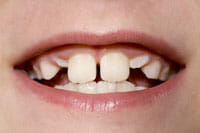
Closing gaps between teeth

I thought it worth jotting a few words down about this one – it’s such a common problem for people, and frankly so easily fixed (without breaking the bank)!

Here at Winning Smiles we’ve been closing gaps between teeth for years, using our Italian composite-filling system (the same white filling system we use for tooth decay) – see our best white fillings blog article.

The beauty of using ‘Cosmetic bonding’ with a top class tooth-coloured filling system (like Enamel Plus) is that:

  • the teeth don’t need to be cut or ground down;
  • it’s over and done with in one visit (no waiting for crowns or veneers to come back from the lab);
  • it’s painless, really, I don’t even use anaesthetic for this technique!

So what are the drawbacks?

Nothing too serious really, I recommend having them polished once or twice a year to maintain their ‘lustre’ and I usually do the polishing during routine 6 month examination appointments (at no extra charge).

They can get chipped/broken, but so can veneers, the difference is that these bonded build-ups can be repaired seamlessly (chipped veneers have to be replaced completely).

And all for around £400. Something worth talking about?  In fact, it’s such a popular treatment I don’t know why I haven’t mentioned it before!

Here’s an example of the before and after pictures:

gap in teeth

Perfect smile not required

Someone came to the surgery the other day, and this happens a fair bit, they apologised for their teeth.

It reminded me that I should put ’something on the website’ about this, as we’re really not here to judge anyone and people should not feel the need to be embarrassed (even if it is human nature).

You see, its only when people really need us that we get to make the most difference.

And if its not too selfish of us, we’d be delighted to see you.

Dental Patients being charged twice?

Time to read exactly 2mins and 16 seconds

I heard on the radio today, (BBC dentist article) that ’some NHS dentists’ are playing the system and charging patients twice for the same treatment.

It is a highly emotional subject for many, and it pains me that the some parts of our media take advantage and sensationalise aspects of this very difficult subject. A number of news reports have even neglected to point out that this situation is only relevant if you are an NHS patient.

This particular version originated with the Tory party, so I can only assume there are political points to be scored with the release of this latest ‘report’…

I do feel the need to stick up for the vast majority of dentists, because I know many who still work within the NHS system, and without exception they are honest hard working professionals providing the best service they can, within, what has to be said is a very narrow framework afforded by their NHS contracts (managed by the local Primary Care Trusts).

I know those of you who know me will have heard this before, but I think that the problems of providing government regulated (tax funded) ‘dentistry for all’ are once again shown up in sharp relief.

The main points as I see them are threefold

  1. Dentistry is now not only about stemming pain, it is about the long term benefits of the work carried out. In our opinion, it is better to spend more time and money on something that lasts longer. There is a whole other conversation about how the work looks (aesthetic or cosmetic) and self esteem, but in this context we should also see it from the society’s point of view (government).
  2. Where does the line get drawn between stemming pain, and providing long lasting quality work? The vast majority of us pay taxes. How much should we spend on medical ‘non-essentials’ that don’t save lives – of which dentistry is one.
  3. The above issues mean that the government is forced to ‘ring-fence’ nhs dentistry to prevent dental costs spiralling out of control at the expense of those essential bits of medicine which save lives….

‘Ring-fencing’
in this instance means capping fees (forcing dentists to use cheap materials and work faster than they should) and limiting what treatments can be used and when (ie only ‘low cost’ treatments approved). The results are disgruntled dentists, disgruntled patients and a subject which recurs every time the media has a ’slow news’ day!

Now I’m just waiting for the obvious response to this email which is, ‘Fine, you think you can do any better?

What’s your solution, Einstein!?’

A subject for another day ;-) (soon)

Why we don’t take teeth out unless we have to (orthodontics)

Crooked teeth need space!

If you were lucky enough to grow up with a perfect set of straight teeth it means that they had just the right amount of space in your mouth, right from the start. We’re not all so fortunate these days though.

Our ancestors usually had bigger mouths than we have, and so crooked teeth were much less common than they are today, perhaps we’ll debate ‘why that is’ another time.

For the moment, lets keep it simple and look at 3 ways of getting more space for those teeth.

  • Take some teeth out, the traditional way for the past 80 years or so. Not so very long ago in the UK it was the norm, probably 80 to 85% of the time. In very crowded mouths it’s still necessary. BUT, If there is less crowding, then taking teeth out could give you too much space, which then causes its own problems, see below. Most people hate the idea in any case, especially for their children. So do we.
  • Widen the jaws. Used to be popular 80 plus years ago but fell completely out of favour. Now, with the swing of the orthodontic pendulum, its slowly coming back and we now use it frequently. Narrow jaws are very common and the method can work well for them – the extra width also looks attractive, reducing those dark corners of the mouth when you smile.
  • Make some teeth slimmer. “Slenderising” by filing between selected teeth. In mild to moderate crowding, especially when combined with jaw widening, it’s a very useful technique and really does make non-extraction a reality for many more people.

Remember, there is no going back if you extract teeth when you don’t need to.

Too much space could mean that

  • The arch can become smaller and too narrow, for a less attractive appearance.
  • Loss of lip support
  • Exacerbation of jaw joint/muscle problems.
  • Excess space can be difficult to keep closed and can tend to open up again, which is obviously going to affect the appearance.

The point of this isn’t to worry anyone, but we try to make sure people have all the information they need to make decisions during our consultations, and we believe extractions should be a last resort instead of routine.

Hopefully posting information in a forum like this is useful for our prospective patients! Feel free to contact us if you have any questions.

Saturday Emergency Dental clinic launches

The real 4th Emergency Service?

This Saturday June 5th sees the inaugural opening of our Saturday emergency dental clinic. And we’re excited about the idea.

For a while now I have been wondering what a private dental emergency service would look like and maybe more importantly who would run it? After all if no dental professionals in Essex are willing to work weekends then the whole idea is a loser…

To my surprise the answer found me….I was discussing with Linda (one of our senior nurses at winning smiles) how I had this great idea to provide a quality dental emergency service at weekends but doubted that I would find anyone to work with us on it, and she said “I would prefer Saturdays to Fridays, and what’s more I know dental people just like me!”

So it was born.

May I introduce you to the Winning Smiles crack emergency dental team:

Dr Damien Reilly BDS

Damien is a dentist with a very special interest: he is also a trained sedationist and has a wealth of experience working with nervous patients, providing high quality, painless dentistry. He teaches both at the London Hospital and at Guys. Perhaps of equal importance is his chairside manner – calm, considerate and professional -he always puts his patients at ease. Don’t take my word for it, ask the nurses!

Linda Girling

Linda has been a dental-nurse for more years than she cares to remember. She is specially trained in Orthodontic nursing and has worked much of her life in Hospital dentistry providing Emergency and Special care. Linda and Damien have worked together for a while now and their approach to patient communication comes from the same place: empathy, enthusiasm and expertise.

Wendy Bartlett

Wendy is the Emergency Dental Team Appointment Coordinator. Her role is to ensure that the whole operation runs smoothly. Wendy knows all about this because she has managed a busy NHS emergency clinic for years. Wendy is efficient and experienced but above all approachable. She is the lady on the end of the phone when patients call in and ensures that they get the appointment and care that they need.

How it works

Winning Smiles support local artists

One thing about dentistry, it is one of the few jobs that merges a theoretical scientific background with an artistic eye

I enjoy the art world and get out to galleries and shows when time permits! Many of you will be familiar with our ‘pondering man’ sculpture: that handsome young man, stripped to the waist who welcomes allcomers through the front door!

We always wanted to help local Essex and London based artists and show their art at the surgery, and we have finally got off the ground with it!

Our first art on show is by a young man called George Winks, now living in London but originally from South Africa. You can get a flavour for his art linked here on his website but look out for his paintings next time you come to the practice.

All the art you see from George, and future artists, at Winning Smiles can be taken home, for a fee, whilst 100% of payments for paintings will be passed onto the artist!